

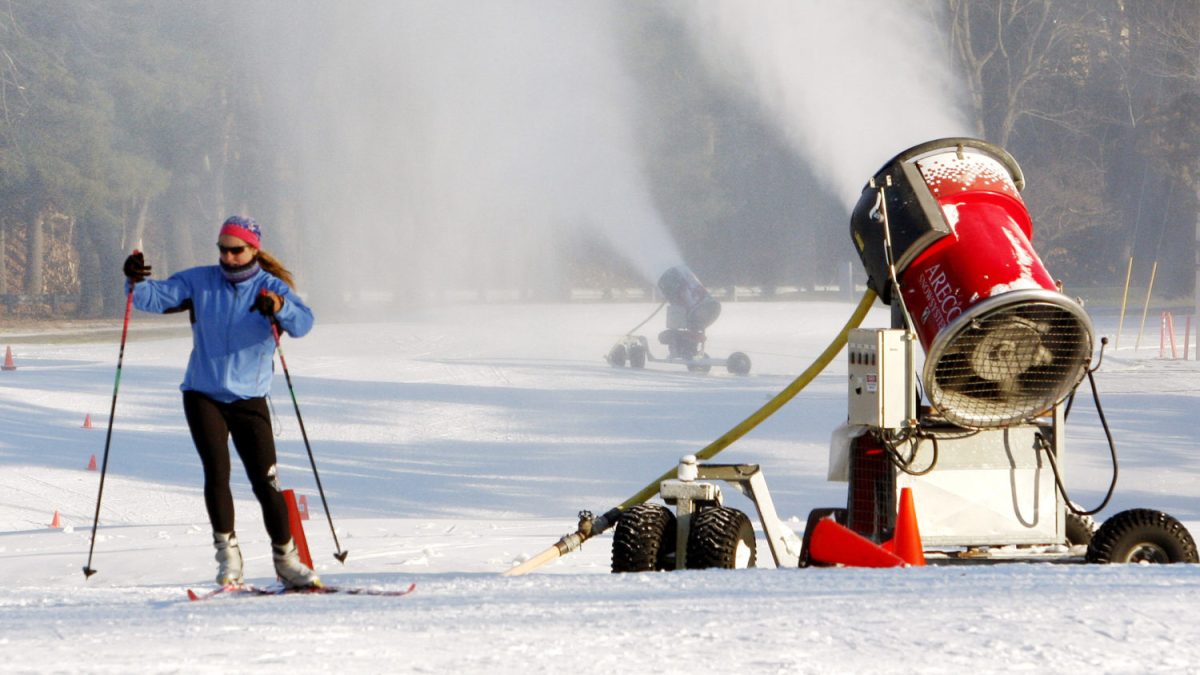
Snow, an annual type of precipitation to most parts of the world. According to Milano Cortina 2026, 3,500 and more from around 93 countries are athletes competing in this year’s winter games. With so many countries, how do they practice when winter is only one season? Well, that’s where the invention of fake snow comes into play, helping to improve the skills of many before the big moment to shine on the cameras of the Olympics, however, how does real snow compare?
First, to understand the benefits and harms of using this type of snow, it’s important to answer the mystery of what really is fake snow? Well, according to nbcolympics.com, fake snow uses high-pressured water and compressed air to create compact spherical balls of ice. This may seem like snow, however, this type of “snow” creates a far more harsh and icy surface. On the other hand, natural snow has a lot more air and is a lot fluffier and preferred.
Now that we understand how artificial snow is created, how does this benefit winter sports? Well, weather is certainly unpredictable, which of course poses a problem for such a big event like the Winter Olympics. Well, according to time.com, ski resorts actually rely greatly on the creation of artificial snow for their guests, and the Winter Olympics in Beijing in 2022 had a games made of 100% of artificial snow. With the rise of climate change, snowfall becomes even more unreliable than ever before, and some countries participating in the Winter Olympics often don’t get snow yearly.
Though, it may seem like this creation of artificial snow has benefited many across the years, natural snow seems to be favorable for its less risk of injury. Like mentioned before, this artificial snow is a lot harder and icier than regular snow. This brings a lot more risks to injuries, and colliding straight into ice creates far more harmful injuries. Sliding on that ice makes athletes glide even faster than before, making it hard to control, therefore, resulting in injury. Lets not forget the environmental harms. The use of carbon to make the snow is dramatically large, adding to the issue of overuse of fossil fuels and increasing the amount of pollution states bbc.com.
So, what is “snow”? Well, artificial snow can be classified as a solution to keeping the Winter Olympics schedule and games going, but it’s harder and icier surfaces compared to actual snow provides more harmful risks to the environment and its participants. Would you prefer actual snow or fake snow?